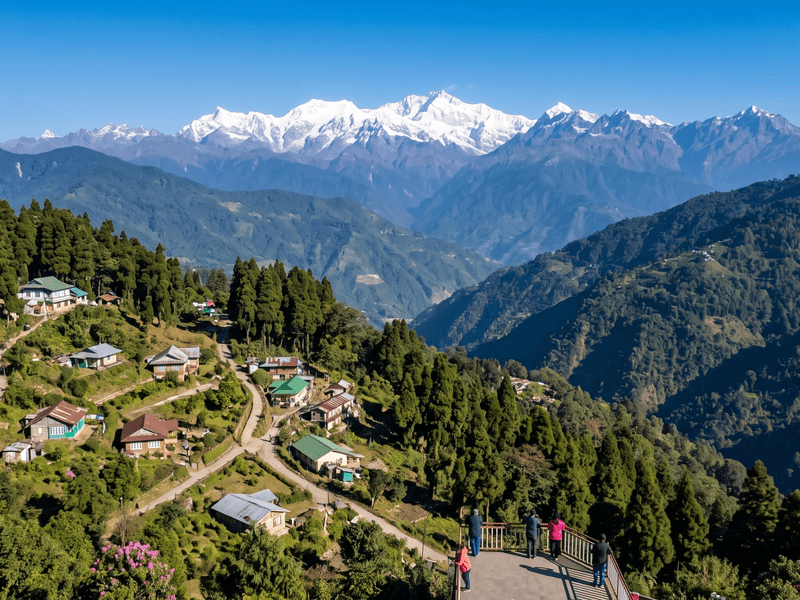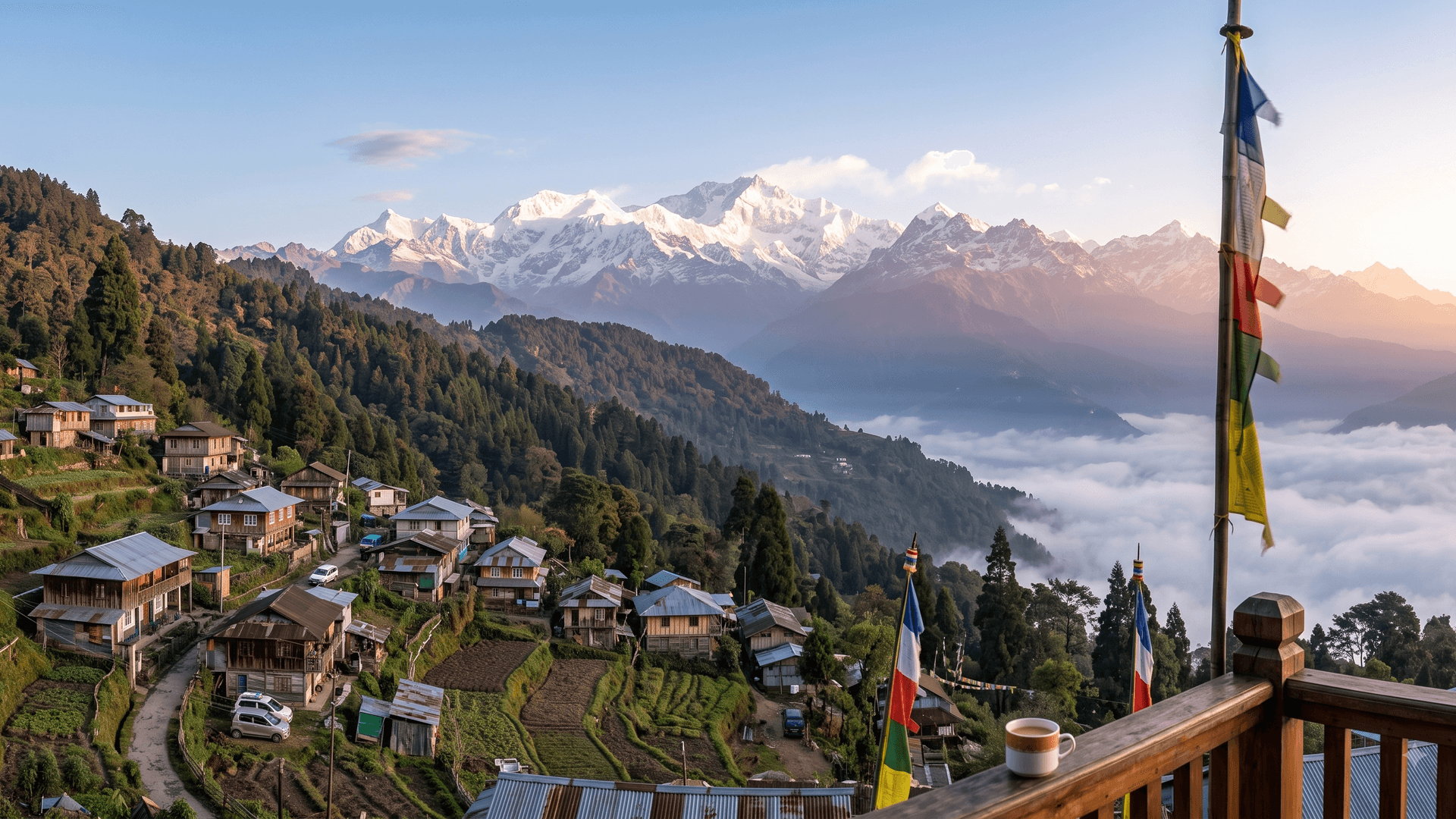
Kolakham is one of a handful of villages strung along a ridge in Kalimpong district, and it's smaller and quieter than its better-known neighbour Lava. There isn't much to the place beyond a single road of homestays — and that's the entire point of coming here.
## Getting there from NJP
Kolakham sits high above Lava, in Kalimpong district, and is usually the last stop on the same route that runs through Sevoke, Kalimpong town, and Algarah. From New Jalpaiguri, the drive takes roughly 3.5 hours, covering close to 95 km, most of it on a two-lane hill road that climbs steadily after Kalimpong. The standard way up is a reserved car or, for larger groups, a shared jeep from the NJP/Siliguri taxi stand to Lava, with a final short climb into Kolakham itself. The last stretch beyond Lava — about 6 km — is narrow and occasionally rutted; it's manageable for most vehicles in dry weather but can be slow after rain, which is one reason group bookings here almost always come with a car arranged end-to-end rather than a self-drive plan.
## When to go
Kolakham's entire reputation rests on one thing: a clear view of Kanchenjunga at first light, visible from several homestay balconies without leaving the village. That view is most reliable October through December, when the air is driest and skies are consistently clear, and again March through May, though spring mornings can be hazier. January and February are cold — genuinely cold, not hill-station cold — with occasional light frost, but sunrise views on clear days rival autumn. June through September is the monsoon: expect cloud cover more days than not, a real chance the mountain doesn't show itself at all during your stay, and a much greener, mistier village that some travellers prefer for exactly that reason. Nobody should book Kolakham in July expecting guaranteed Kanchenjunga photos.
## What to do
There isn't a checklist of sights in Kolakham — that's the point. The village itself, with its handful of homestays strung along one ridge road, is the destination. Mornings start early for the sunrise; the rest of the day is for walking the village paths, sitting with the host family, or making the short trip to Neora Valley National Park, whose eastern boundary is a short drive or a longer walk away. The park is home to red pandas, though sightings are rare and shouldn't be the reason for the trip; it's better thought of as dense, largely untouched forest with a handful of marked trails. Entering the park's interior for trekking requires a forest department permit, arranged locally rather than online — hosts and local operators handle this routinely, but it's not something to assume is automatic if the plan involves more than a boundary walk. Lava, six kilometres back down the road, has a monastery worth the detour and is the nearest place with any real shopping.
## What's hard about it
Be honest with the group before booking: Kolakham has patchy mobile network at best, no ATM (Lava is the nearest, and even that's not guaranteed to be stocked — carry cash from Kalimpong or Siliguri), and very little in the way of evening entertainment beyond conversation and the cold. Rooms are simple. This is a place for people who want quiet and a view, not people who want amenities. The final approach road is the other real constraint — it rules out low-clearance hatchbacks in wet weather, and anyone travelling as a large group should expect the vehicle question to come up early in planning.
## Where to eat on the way
Most of the route up from NJP passes through Sevoke and then Kalimpong town, both of which have reasonable stop options — small dhabas around Sevoke for tea and quick snacks, and a wider spread of proper meals once you're in Kalimpong, from momos and thukpa to standard Bengali thali places along the main road. Past Kalimpong, options thin out fast; Lava has a few basic eateries, but the sensible plan is to eat properly in Kalimpong and treat anything after that as tea-and-snacks only. Once in Kolakham, meals come from the homestay kitchen — that's the arrangement everywhere in the village, and it's usually the best food available regardless.
-1-800x600.png&w=1920&q=75)